
Dominic Banguis
•
August 13, 2026
•
6 min read


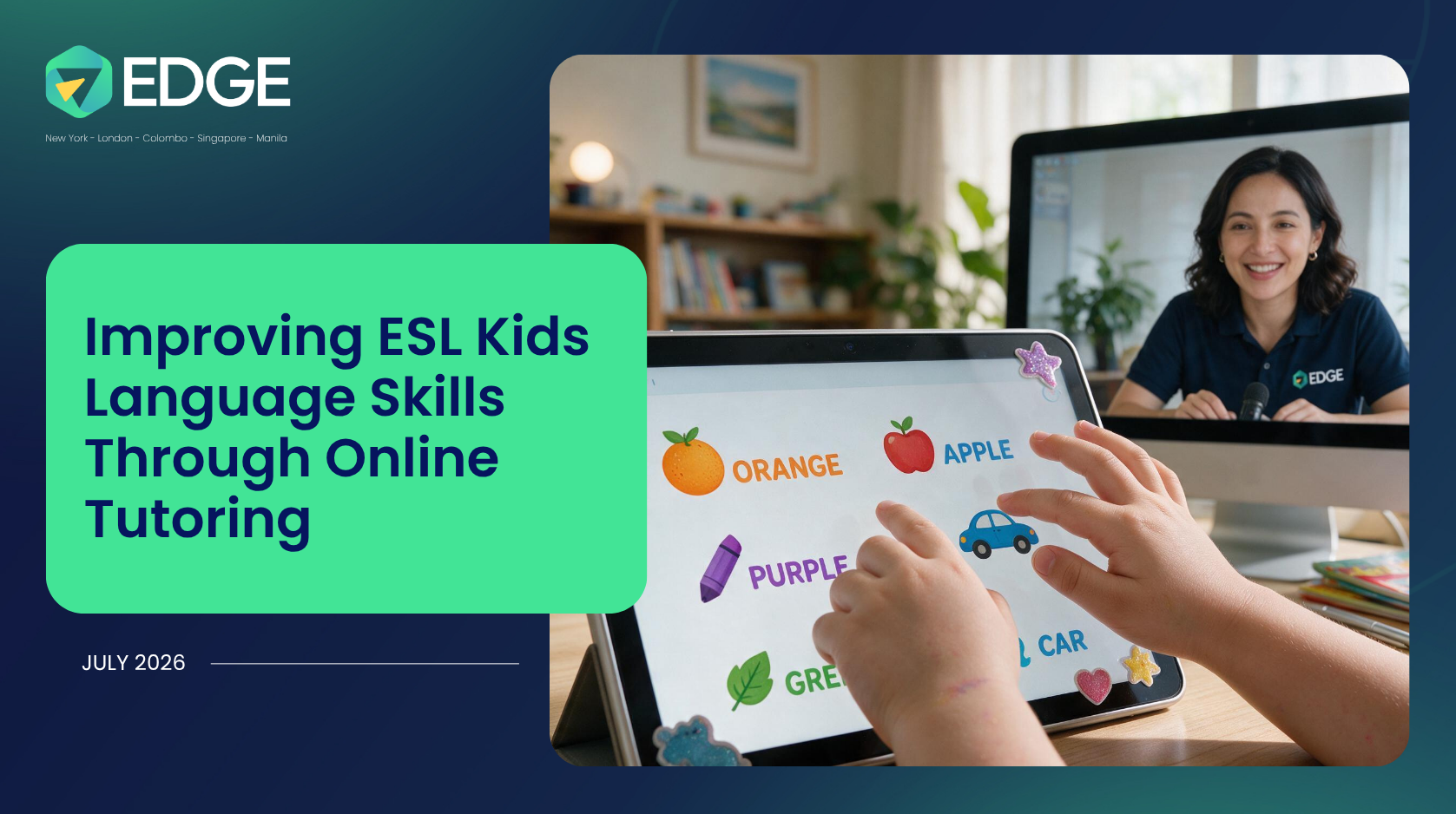
Learning a new language as a child involves more moving parts than most adults remember from their own experience. Vocabulary, grammar, listening comprehension, pronunciation, reading, and writing all develop at different rates, and a child can be strong in one area while struggling noticeably in another. Online tutoring, done well, gives ESL learners something a general classroom often cannot: focused, individualized attention on exactly the skill area holding them back.
The question for parents and education providers is not whether online tutoring can help ESL learners. The evidence for that is well established. The real question is what separates an online ESL program that produces genuine language gains from one that simply keeps a child occupied for an hour a week.
Effective ESL tutoring for children works across several skill areas simultaneously, rather than isolating one at the expense of the others:
A program that focuses heavily on one of these areas, vocabulary drills for instance, while neglecting listening and speaking practice, will produce a child who can pass a vocabulary quiz but still struggles to hold a real conversation. Balanced coverage across all five areas, even if the emphasis shifts slightly session to session based on a child specific needs, produces far more durable language gains over a full term.
A few challenges show up consistently in ESL tutoring for young learners, and how a tutor handles them matters as much as the curriculum itself. Attention span is often shorter than the session length, which means pacing and variety within a session matter more than they do for older students. Confidence gaps are common, particularly for children who feel embarrassed making mistakes in front of a tutor. And progress is rarely linear, with plateaus that can be discouraging if a tutor and parent are not tracking gains over a longer window than a single week or month.
Experienced tutors plan around these challenges rather than being surprised by them. Shorter, varied activities within a session address attention span. Deliberate, low pressure error correction addresses confidence. And structured progress tracking helps everyone involved see gains that might not be obvious session to session. A child who seems to have plateaued on vocabulary, for example, may actually be making significant gains in listening comprehension that simply are not visible without a structured assessment checking for it directly.
Tutoring sessions alone, however well designed, work best when reinforced by consistent exposure between sessions. A few simple habits at home meaningfully support the progress a child makes with a tutor:
Providers that actively coach parents on this kind of reinforcement tend to see faster progress than those that treat the tutoring session as the entire intervention.
Vague impressions of improvement are not the same as documented progress, and the difference matters a great deal to parents and institutions trying to judge whether a tutoring investment is working. Effective ESL programs for children use structured, age appropriate assessment at regular intervals, not just a tutor general sense that a child is doing better.
Programs that skip structured assessment are relying entirely on subjective impression, which makes it very difficult for a parent or institution to judge whether the tutoring relationship is actually producing language gains or simply providing pleasant, low pressure practice time.
Beyond individual tutor skill, program structure matters. The strongest ESL programs for children combine consistent tutor pairing, so rapport builds over time, with structured assessment at regular intervals, so progress is visible rather than assumed. They also give tutors access to a child prior learning history, so each session builds on the last rather than starting from scratch.
This is where a well run tutoring provider distinguishes itself from an ad hoc arrangement. Consistency, structure, and visible progress tracking are operational choices, not just teaching philosophy, and they require a provider that has built systems to support them. A provider without these systems in place can still deliver pleasant, well intentioned sessions, but will struggle to demonstrate the kind of measurable language growth that increasingly matters to both families and institutional buyers.
Families and institutions often ask whether group or one-to-one tutoring produces better ESL outcomes for children, and the honest answer is that it depends on the child current level and specific goals. One-to-one tutoring generally accelerates progress fastest for beginners still building foundational vocabulary and confidence, since every minute of the session is focused entirely on that individual child needs.
Small group settings, once a child has some baseline confidence, offer a different and valuable benefit: authentic peer interaction, which is difficult to replicate in a one-to-one setting and mirrors more closely how language actually gets used in real social and academic contexts. Many effective programs use one-to-one tutoring initially to build foundational confidence, then transition a child into small group sessions once they are ready to benefit from peer interaction without becoming overwhelmed by it.
The right choice ultimately depends less on a fixed rule and more on a specific child current confidence level, learning goals, and how they personally respond to a group dynamic, which is why an initial assessment conversation with a tutoring provider should always include this question directly.
EDGE Tutor ESL programs for children are built around consistent tutor pairing, structured progress assessment, and tutors trained specifically in child language acquisition, so families and institutions can see measurable growth across every core skill area, not just the ones that are easiest to test.
Looking for an ESL tutoring program built around real, measurable language growth for young learners? Get in touch with EDGE Tutor to learn more.