
Llyanna Calara
•
March 13, 2026
•
3 min read


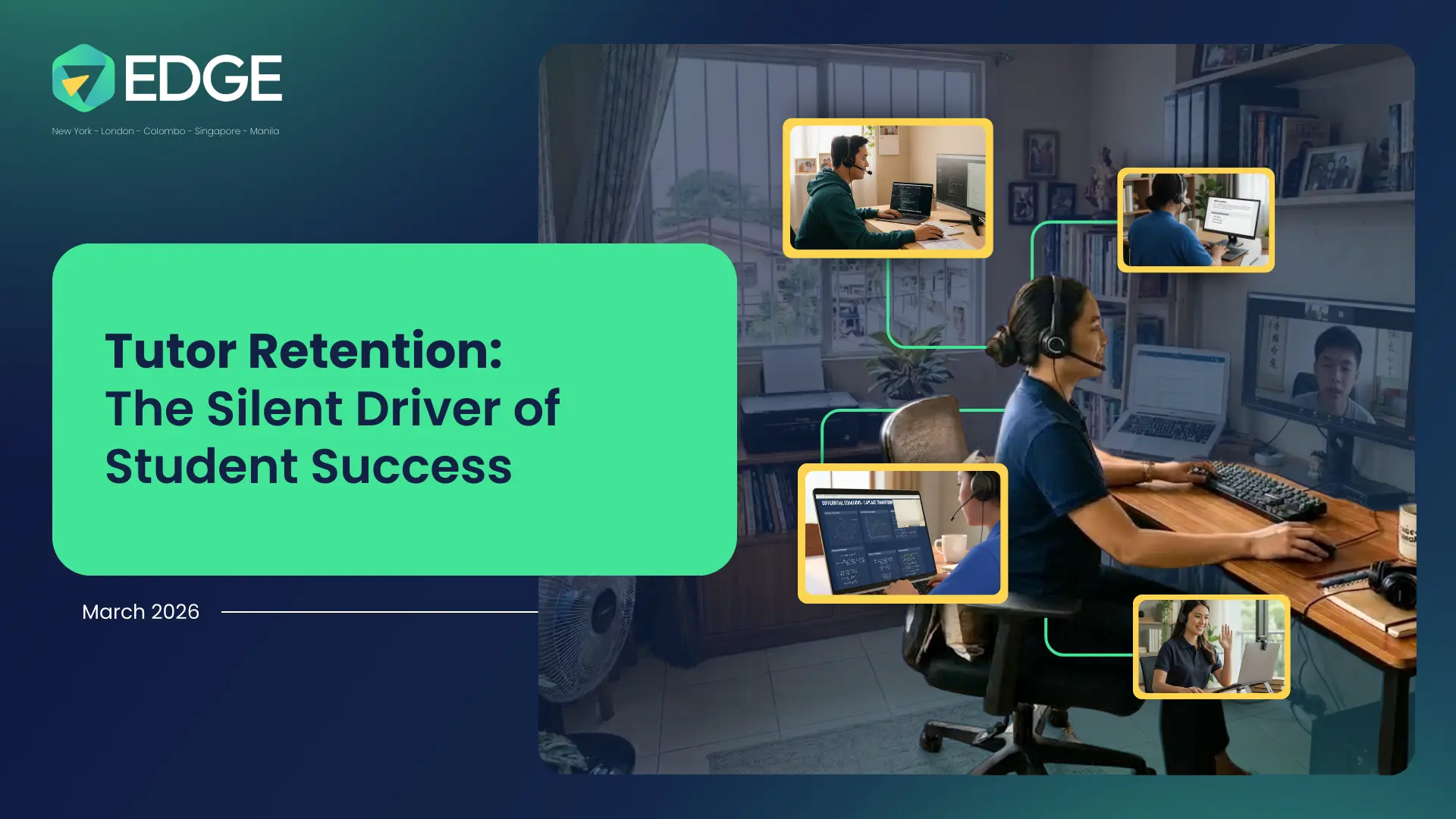
Tutor retention is one of the most important but overlooked drivers of student success. When tutors stay, students get consistency, trust grows, and programs become easier to scale. When tutor turnover is high, learning continuity breaks, support costs rise, and delivery becomes harder to sustain.
For EdTech leaders, tutor retention is not just an HR metric. It is a performance metric that affects student outcomes, service quality, and long-term growth.
Most education companies focus on visible growth metrics like enrollment, lesson volume, and revenue. Fewer pay close attention to tutor retention, even though it shapes all three.
When strong tutors stay:
This is why improving tutor retention is not only about workforce stability. It is also about protecting the student experience and making program growth more sustainable.
In simple terms, it measures whether tutors stay long enough to:
That stability matters because students benefit from consistency. A tutor who stays long enough to understand a learner’s pace, needs, and progress can deliver stronger support than a revolving door of replacements.
High tutor turnover creates more than staffing inconvenience. It affects the quality of learning itself.
When tutors leave too often:
In tutoring, continuity matters. Students often perform better when support is regular, predictable, and relationship-based. High turnover makes that harder to maintain.
This is also where education workforce stability becomes important. A stable tutoring workforce gives students a more reliable learning experience. An unstable one creates inconsistency, even when curriculum and systems are strong.
At first, turnover can look like a people issue. Over time, it becomes a business issue.
Frequent tutor exits can lead to:
That is why retaining online tutors is not just about keeping roles filled. It is about protecting the quality and credibility of your tutoring model.
Low tutor retention increases costs in ways many teams underestimate.
Every time a tutor leaves, the organization may need to:
Even if the direct replacement cost looks manageable, the indirect cost can be much larger. Leadership attention gets pulled into staffing gaps. QA teams spend more time on recovery. Operations teams work harder to protect continuity.
For tutoring companies, this means tutor retention has a direct link to margin. The more preventable turnover you have, the more expensive your delivery model becomes.
Strong tutor engagement is one of the clearest ways to improve tutor retention.
Retention tends to improve when tutors feel:
Edge Tutor’s approach reflects that principle. Rather than treating tutors as interchangeable labor, the model is built around engagement, readiness, and long-term fit.
Key elements include:
This matters because tutor retention is rarely solved by incentives alone. It improves when the job itself is sustainable.
A sustainable tutoring workforce does not happen by accident. It is built through design.
Most retention strategies come back to a few practical factors:
For EdTech and tutoring companies, this usually means:
This is where education workforce stability becomes a competitive advantage. Stable tutor teams make it easier to deliver consistent quality at scale.
It is easy to think of tutor retention as a back-office concern. In reality, it is part of instructional strategy.
When tutors stay:
That is why tutor retention is the silent driver of student success. It works quietly in the background, but it shapes the classroom experience, the platform experience, and the business result.
For B2B education companies, it should be treated as a core operating KPI, not just an HR metric.
Tutor retention is the ability of an education provider to keep qualified tutors engaged, effective, and committed over time.
Tutor retention matters because students learn better with consistency. When tutors stay, students build trust, maintain momentum, and experience more stable support.
High tutor turnover can weaken lesson continuity, increase support costs, and reduce parent, school, or district confidence. Over time, it becomes a growth and margin problem.
Companies can improve tutor retention by hiring for fit, strengthening onboarding, providing clear support systems, improving working conditions, and treating tutor engagement as a strategic priority.
If your tutoring programs are growing but your teams are feeling the pressure of turnover, repeated retraining, or continuity issues, it may be time to treat tutor retention as a strategic lever.
Edge Tutor helps education companies build a more sustainable tutor workforce through:
Explore how our tutor operations model supports workforce stability and consistent student delivery.
.webp)